Engineai SA01 EDU Bipedal Robot
In stock
- BRAND:
- ENGINE AI
- PART #:
- SA01
- ORIGIN:
- China
- AVAILABILITY:
- SUBJECT TO AVAILABILITY
- SKU:
- Engineai-SA01
Engineai SA01 EDU (SA01)
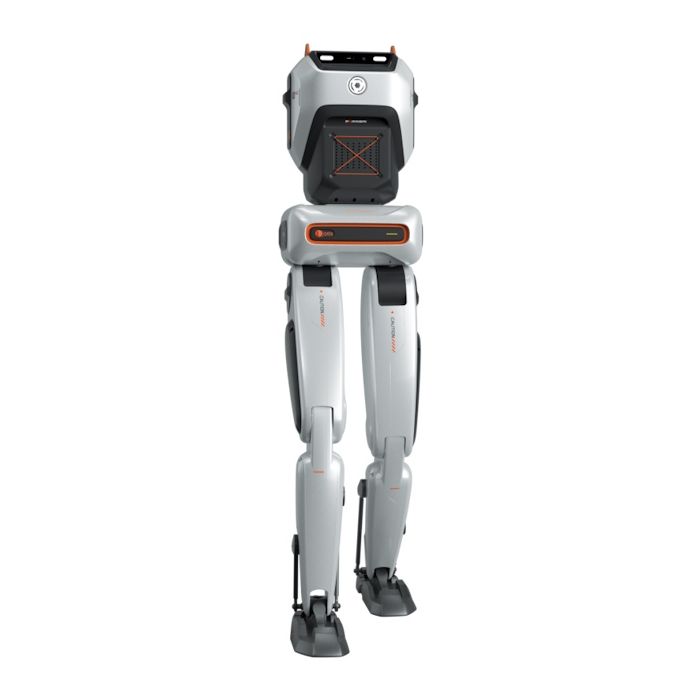
EngineAI markets SA01 as a “highly extensible biped robot platform” and highlights its combination of lightweight structure, modular power, and developer-oriented openness.
Unlike full-size humanoids that emphasize arms, hands, and human-facing interaction, SA01 EDU focuses on legged mobility fundamentals: stable biped walking, running-capable actuation, and a sensor/control stack suitable for algorithm iteration. In public communications about the model, EngineAI and third-party coverage emphasize “full open source” positioning and affordability relative to typical biped research hardware, framing SA01 EDU as a platform that lowers the barrier to serious biped experimentation.
Design and Features
Biped platform optimized for extensibility
EngineAI’s SA01 page describes the platform as a biped robot base intended for “high expandability,” with the core specification centered on two 6-DoF legs (12 DoF total) and an integrated sensor suite for balance control.
The form factor is often characterized as a “lower-body” biped platform: it provides the legged locomotion system and mounting points for additional modules (compute, perception payloads, experimental frames), letting teams tailor the robot to their curriculum or research objectives.
Self-developed motor and motion-control emphasis
EngineAI highlights a self-developed motor (“S160 motor”) paired with “excellent motion-control algorithms,” positioning the platform as capable of walking and running demonstrations.
Third-party reporting echoes this emphasis by describing support for dynamic actions (e.g., running and jumping) and linking performance to a combination of actuator design and RL-based control strategies.
Quick-release battery for lab workflows
A practical feature for classroom and lab use is the SA01’s quick-release battery box, described by EngineAI as carrying a 15Ah lithium battery with over two hours of continuous operation, designed for easy removal and charging.
Structural durability and “research-grade” use
EngineAI describes an aluminum-alloy exoskeleton with integrated sealing and heat dissipation, balancing strength and packaging.
A separate industry write-up on SA01 EDU’s scaled delivery highlights a high-strength aluminum alloy frame, a structure designed for impacts and high-intensity experimentation, and the availability of replacement parts to keep long-running research projects operational.
Technology and Specifications
Public SA01 EDU specifications are available from EngineAI’s product page and are reinforced by third-party reporting.
Dimensions and weight
EngineAI lists the standing dimensions as approximately 1350 mm × 250 mm × 350 mm (L×W×H) and a total weight of ~40 kg.
Because this is a biped platform rather than a full humanoid body, these dimensions describe the platform’s base/stance geometry rather than a human-height robot.
Degrees of freedom and leg structure
EngineAI lists 12 total DoF, with 6 DoF per leg, supporting a wide range of gait patterns and enabling researchers to study foot placement, swing trajectories, and balance recovery.
Mobility performance and joint torque
EngineAI lists a movement speed of ~1 m/s and maximum joint torque of 160 N·m.
A delivery-focused write-up adds detail, citing knee joint max torque of 160 N·m and ankle max torque of 96 N·m, and describing the platform as capable of single-leg standing, with joint peak speed reported up to 28 rad/s.
Power, endurance, and operating temperature
EngineAI specifies a 15Ah battery with 0.819 kWh energy and a maximum voltage of 54.6V, with ~2 hours endurance.
The company also lists an operating temperature range of -20°C to 55°C, supporting broader deployment in varied lab/field test conditions.
Sensors and balance control
EngineAI lists a high-precision IMU used for attitude perception and balance control—an essential sensor for biped stabilization, state estimation, and RL policy deployment.
Payload capacity
EngineAI lists a payload capability of ~10–15 kg, which is relevant for mounting compute, sensor payloads (e.g., depth cameras), and experimental frames.
Applications and Use Cases
University and lab research in biped locomotion
SA01 EDU is aligned with core legged-robotics research topics: gait generation, disturbance rejection, model predictive control (MPC), and reinforcement learning for walking/running. Its 12-DoF architecture and IMU-based balance loop are typical prerequisites for modern biped experimentation.
Embodied intelligence development and sim-to-real workflows
In many embodied AI pipelines, researchers train policies in simulation and validate on real hardware. Coverage of SA01 EDU frequently frames its value around being accessible, open, and modifiable, which supports fast iteration on controllers and system identification under real-world constraints (friction variation, actuator limits, sensor noise).
Education and curriculum platforms
SA01 EDU is explicitly positioned for research and education. A July 2024 release reported by industry media describes it as a “research and education” biped designed to lower the threshold for humanoid/biped development.
In practical course settings, such a platform can support labs on kinematics, dynamics, state estimation, and control—especially when students can modify code and hardware configurations.
Prototyping legged products and mobility modules
While SA01 EDU is not marketed as a turnkey industrial worker, its payload capacity and modular stance make it useful for early prototypes: testing sensor placements, validating foot designs, and benchmarking power consumption across gaits. One industry article reports walking power consumption under 200 W in its described configuration, indicating attention to efficiency in the motion system and algorithms (though real results vary with surface, gait, and payload).
Advantages / Benefits
Open-source positioning for faster experimentation
SA01 EDU’s “full open source” messaging is central to its adoption narrative, aiming to reduce friction for labs and developers who need to instrument controllers, modify system parameters, and integrate custom payloads.
High torque density for dynamic gaits
The published torque figures (notably 160 N·m at the knee, and EngineAI’s 160 N·m max joint torque spec) support experimentation with dynamic behaviors such as faster walking, rapid braking, and recovery maneuvers.
Practical lab operations
Quick-release battery design, published endurance (~2 hours), and durable aluminum-alloy structure target day-to-day lab realities: rapid reset between experiments, repeated trials, and reduced downtime from handling damage.
FAQ Section
What is EngineAI SA01 EDU (SA01)?
EngineAI SA01 EDU is an open-source bipedal robot platform designed for research and education, featuring 12 DoF (6 per leg), IMU-based balance sensing, and a modular structure for experimentation.
How does EngineAI SA01 EDU work?
SA01 EDU uses actuated leg joints with high-torque modules, a high-precision IMU for posture estimation, and motion-control algorithms to generate stable biped gaits. It is designed to be extended with payloads (10–15 kg) and software modifications for RL/control research.
Why is EngineAI SA01 EDU important?
Accessible biped hardware is a bottleneck for humanoid and legged-robotics research. SA01 EDU is positioned to reduce that barrier through open-source messaging and a relatively low launch price for a biped platform, enabling more teams to run real-world locomotion experiments.
What are the benefits of EngineAI SA01 EDU?
Reported benefits include 12-DoF biped legs, ~40 kg portable platform weight, ~1 m/s movement speed, 160 N·m max joint torque, ~2 hours runtime from a quick-release 15Ah battery, and 10–15 kg payload capacity for research payloads.
Summary
EngineAI SA01 EDU (SA01) is a research-and-education biped platform built around 12 DoF (6 per leg), a high-precision IMU for balance control, and a modular mechanical/electrical design intended for rapid experimentation. Official specifications cite ~40 kg system weight, ~1 m/s speed, 160 N·m maximum joint torque, 10–15 kg payload capacity, and ~2 hours runtime from a 15Ah (0.819 kWh) battery, while public reporting emphasizes full open-source positioning and broad delivery to reduce barriers to biped and embodied-intelligence development
Specifications
| PART # | SA01 |
|---|---|
| ROBOT USE | EDUCATION |
| SECONDARY DEVELOPMENT | SUPPORTED |
| BRAND | ENGINE AI |