
EngineAI S2 Original IP Service Robot (Coming Soon)
In stock
- BRAND:
- ENGINE AI
- MODEL:
- S2
- ORIGIN:
- China
- AVAILABILITY:
- SUBJECT TO AVAILABILITY
- SKU:
- EngineAI-S2
EngineAI S2 Original IP Service Robot (Coming Soon)
Unlike EngineAI’s general humanoid models (e.g., SE01) and research biped platform (SA01), the S2 is framed as a character-driven (“Original IP”) robot intended to blend mobility, expressive interaction, and presentation—a common product strategy for service robotics where engagement and approachability are central to value. EngineAI’s official pages, however, do not yet publish full specifications or a release date, indicating that S2 remains pre-release at the time of the latest official site updates.
Design and Features
“Original IP” concept and service-oriented design
EngineAI describes S2 as its first Original IP service robot, a label that typically implies a distinct industrial design language, character identity, and interaction style that can be used consistently across campaigns, venues, and customer experiences. On the official product page, the company currently provides only the name and positioning, with “more new products coming soon,” suggesting the product is being staged for a future launch.
Humanoid form factor tailored to cultural tourism
A detailed public description appears in the World Robot Conference (WRC) exhibitor product entry for S2. It states that S2 is a humanoid robot primarily oriented toward cultural tourism scenarios and is an important product in EngineAI’s self-developed IP series.
This WRC listing also indicates that the S2’s design intent centers on presentation and interaction rather than purely industrial manipulation—consistent with the “service robot” label and the “IP series” framing.
Architecture derived from SA01 with expanded upper-body modules
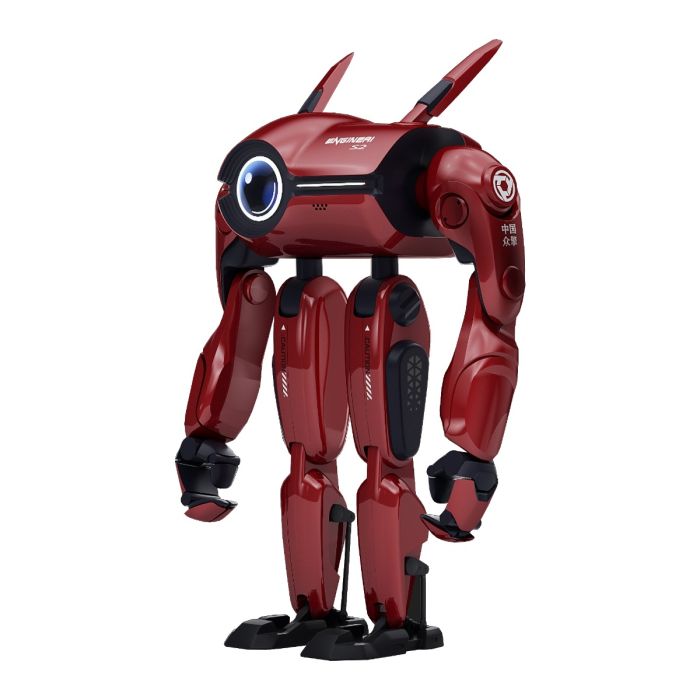
According to the WRC product description, S2 is based on the SA01 architecture, and extends a biped base by adding arms, a head, and a display screen.
This suggests EngineAI is reusing a proven locomotion platform (SA01) as the foundation while adding the upper-body elements necessary for service roles such as greeting, guiding, and media-rich presentation.
Expressive “eye” effects and display-based communication
The WRC listing states that S2 includes dynamic effects that simulate human eyes, and includes a display screen as part of its body expansion.
In service robotics, eye-like cues and screen content often serve practical functions: maintaining attention, conveying emotion or intent, signaling system status, and presenting directions, schedules, or promotional content in crowded environments.
Planned integration with embodied foundation models
The WRC entry further notes that S2 is planned to be connected to an “embodied large model” (具身大模型) in the future, aiming for multimodal interaction that combines language and actions.
This aligns with a broader industry trend: moving beyond scripted dialogues toward systems that can interpret context, follow instructions, and coordinate movement and gestures—while remaining safe and reliable in public spaces.
Technology and Specifications
As a coming-soon product, S2’s publicly confirmed technical data is limited. EngineAI’s official S2 pages currently do not provide dimensions, degrees of freedom, runtime, payload, sensor suite, or compute specifications.
What is publicly described
Based on the WRC exhibitor listing, the following aspects are explicitly described:
-
Humanoid service robot aimed at cultural tourism scenarios
-
Built on SA01 architecture
-
Biped base expanded with arms, head, and a display screen
-
Dynamic eye-like effects for expressive presentation
-
Planned future connection to an embodied large model enabling language + action multimodal interaction
What is not yet disclosed (common buyer questions)
For procurement and integration planning, key unknowns typically include:
-
Locomotion performance: walking speed, terrain tolerance, stair/threshold handling
-
Runtime and charging: battery capacity, duty cycle, docking/charging options
-
Safety: sensing for people/obstacle avoidance, stop behaviors, certification targets
-
Interaction: microphone array, speakers, cameras, on-device vs cloud inference
-
APIs and integration: SDK availability, ROS compatibility, content-management tools for the display
Applications and Use Cases
Cultural tourism: attractions, museums, themed venues
The most explicit use case described publicly is 文旅 (cultural tourism). In these environments, S2 would typically be expected to:
-
Welcome visitors, deliver short “show” scripts, and manage queue flow
-
Provide wayfinding and schedule information via screen-based prompts
-
Support guided experiences (exhibit explanations, themed storytelling, photo moments)
-
Enhance brand identity through a consistent “character” presentation
Public service and venue operations
Service robots often expand into adjacent public-facing environments: convention centers, shopping complexes, and corporate lobbies. While S2 is not yet fully specified, its described screen + expressive interaction design aligns with common duties such as reception, directional assistance, announcements, and event support.
Multi-modal engagement for marketing and events
The “Original IP” framing points toward deployments where memorability matters: campaigns, pop-ups, and exhibition booths. A character-driven robot can function as a moving media channel—combining motion, screen content, and interactive dialogue—especially if the planned multimodal embodied-model integration matures into reliable, safe behavior in crowds.
Advantages / Benefits
Differentiated guest experience through “IP” embodiment
Many service robots provide similar core functions (greeting, directions), but an “Original IP” robot aims to deliver brand-consistent personality and presence. The S2 concept—expressive eyes, display integration, and a purpose-built identity—supports experience design as much as utility.
Biped base for human-designed spaces
By building on a biped architecture derived from SA01, S2 is positioned to operate in environments designed around human movement patterns. If robust in practice, biped mobility can reduce site modification requirements compared to platforms that need ramps or wider clearances.
Path to richer interaction via embodied models
EngineAI’s stated intent to connect S2 to an embodied large model suggests a roadmap toward more natural language + action interaction. If implemented with strong safety constraints, this can improve usability in open-ended visitor interactions (e.g., answering questions, adapting tone, responding to gestures).
FAQ Section
What is the EngineAI S2 Original IP Service Robot?
EngineAI S2 is a coming-soon Original IP service humanoid robot announced by ENGINEAI, positioned for cultural tourism and other public-facing service scenarios.
How does the EngineAI S2 work?
Public descriptions indicate S2 is based on SA01 architecture and extends a biped base with arms, head, and a display screen, including dynamic eye-like effects for expressive interaction. Additional details (sensors, autonomy stack) have not yet been fully disclosed on the official product page.
Why is the EngineAI S2 important?
S2 is notable as EngineAI’s first Original IP service robot concept, aimed at experience-driven deployments (e.g., cultural tourism) and described as planning future integration with an embodied large model for multimodal language-and-action interaction.
What are the benefits of the EngineAI S2?
Based on public descriptions, key benefits are expected to include service-focused design (screen + expressive eyes), a biped architecture derived from SA01, and a roadmap toward embodied-model-based multimodal interaction—all tailored to public venue engagement.
Summary
EngineAI S2 is a forthcoming Original IP service humanoid robot announced by ENGINEAI and positioned for cultural tourism and public-facing experiences. While official pages currently provide only a “Stay tuned” placeholder, the World Robot Conference exhibitor entry describes S2 as SA01-architecture-based, extending a biped base with arms, head, and a display, featuring dynamic eye-like effects, and planning future integration with an embodied large model to enable multimodal language-and-action interaction. Until EngineAI publishes a full specification sheet and launch details, S2 is best understood as a pre-release service robot concept with publicly stated design intent but limited confirmed technical metrics.