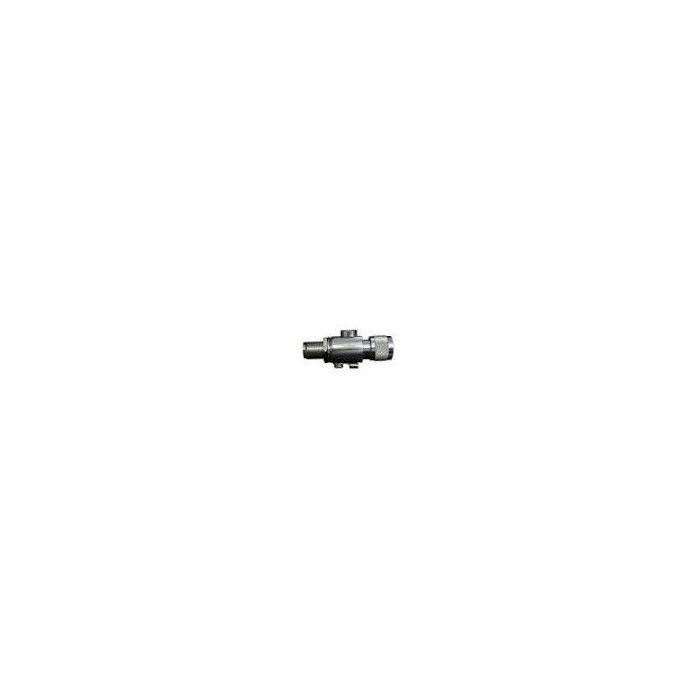
BSN NAL Lightning Arrestor For GPS Antenna (ASE-LA03)
In stock
- PART #:
- ASE-LA03
- AVAILABILITY:
- SUBJECT TO AVAILABILITY
- SKU:
- BSN NAL-ASE-LA03
BSN NAL Lightning Arrestor For GPS Antenna (ASE-LA03)
Lightning-related damage to GPS antenna systems most commonly occurs due to high voltages induced by nearby lightning strikes (not necessarily a direct strike to the antenna). Inline lightning arrestors are widely used to mitigate this risk by placing a grounded protective device between the antenna and the point where the coax enters the building (or protected enclosure).
Because GPS/GNSS antennas are frequently mounted outdoors—on rooftops, masts, vehicle structures, or exposed equipment cabinets—ASE-LA03 is typically procured as part of a broader site hardening approach that includes proper bonding/grounding and cable routing practices.
Design and Features
Inline coaxial surge protection concept
ASE-LA03 is designed to be installed in-line on the GPS antenna coaxial feed, acting as a preferred discharge path for surge energy to a grounding system. While reseller pages for ASE-LA03 provide limited technical detail beyond product identification, the role implied by the product name (“Lightning Arrestor For GPS Antenna”) aligns with standard GPS inline arrester deployment: a coaxial device bonded to earth ground, placed at the building entry or another low-impedance ground point.
Grounding-dependent protection
Lightning arrestors are only effective when installed with proper grounding. Industry guidance for GNSS installations commonly instructs installers to bond the arrester body to earth ground per the manufacturer’s installation instructions.
Microchip’s GPS inline arrester guidance similarly explains that arrestors are mounted on low-impedance ground between antenna and building entry and require no additional power beyond the ground lead.
Integration with GPS antenna systems
GPS antennas are often active antennas (with a low-noise amplifier powered through the coax). Many GPS lightning arrestors are therefore specified as DC-pass devices so that power can continue to reach the antenna through the same coax line. The exact DC-pass characteristic of ASE-LA03 is not stated on the reseller listing; however, DC-pass is a common requirement in GPS antenna protection designs and is explicitly described in general GPS inline lightning arrester references.
(Installers typically verify DC-pass/DC-block requirements based on the specific GPS antenna model in use.)
Technology and Specifications
Product identification and catalog placement
Across multiple storefronts, the accessory is consistently identified as:
-
Product name: “BSN NAL Lightning Arrestor For GPS Antenna”
-
Part number: ASE-LA03
-
Category: Docking Station Accessories / Antennas / Spare Parts
Why GPS/GNSS installations commonly require arrestors
GPS antenna systems can be vulnerable because the antenna is typically elevated and connected to sensitive indoor electronics through a long coax run. Microchip’s GPS arrester guidance highlights that induced voltages from nearby lightning can damage both antennas and receivers, and recommends installing inline arrestors between the antenna and building entry; it also notes that if the cable between the arrester and receiver is long, a second arrester closer to the receiver may further reduce induced voltage at the equipment end.
Connector compatibility
Reseller listings for ASE-LA03 do not consistently publish connector interface details (for example, TNC vs N vs SMA). Because GPS/GNSS systems and docking platforms vary widely, connector compatibility is typically confirmed at quotation time based on:
-
the GPS antenna connector type,
-
the cable type/connectorization,
-
and the equipment-side connector.
Applications and Use Cases
GPS-enabled docking stations and fixed terminals
Many docking stations and fixed terminals include GPS capability for location reporting, compliance logging, or emergency system context. In these deployments, a rooftop GPS antenna may be required, and ASE-LA03 is used to protect the indoor equipment and cabling path from lightning-induced surges.
Rooftop and tower-mounted GNSS antennas
Where GNSS antennas are installed on rooftops, poles, or towers, lightning exposure increases. GNSS installation guidance commonly recommends adding coaxial lightning protection at the antenna coax input and bonding it to earth ground.
Remote sites and harsh-weather infrastructure
Remote industrial sites (utilities, mining camps, coastal facilities) often experience higher lightning exposure and may have long cable runs. GPS inline arrestors are part of a practical hardening approach that also includes correct routing, grounding, and placement.
Advantages / Benefits
Reduced risk of damage and downtime
The primary benefit of ASE-LA03 is reducing the likelihood that lightning-induced surges propagate down the coax into indoor electronics—helping prevent equipment damage, service interruptions, and costly replacement events. This is the core purpose of GPS inline lightning arrestors described in industry guidance.
Improved installation robustness for outdoor antennas
GPS antennas are commonly installed outdoors for clear sky view; the more exposed the antenna location, the more valuable a grounded surge diversion point becomes as part of the installation.
Procurement clarity (purpose-built accessory)
Because ASE-LA03 is sold as a dedicated “Lightning Arrestor For GPS Antenna,” it is straightforward to specify in bills of materials for GPS-antenna installations, especially when the rest of the system components are sourced from the same accessory ecosystem.
FAQ Section
What is the BSN NAL Lightning Arrestor For GPS Antenna (ASE-LA03)?
ASE-LA03 is an inline lightning/surge protection accessory intended to protect GPS antenna coax feeds and connected indoor equipment from lightning-induced surges.
How does ASE-LA03 work?
A GPS lightning arrestor is installed in-line on the coax cable and bonded to earth ground, providing a controlled path to divert surge energy away from sensitive electronics.
Why is ASE-LA03 important?
Lightning commonly damages GPS systems via induced voltages from nearby strikes. Inline arrestors installed at a low-impedance ground point (often near building entry) are a standard mitigation method.
What are the benefits of using a GPS antenna lightning arrestor?
Benefits include reduced risk of receiver damage, improved site resilience, and improved installation robustness for outdoor antennas—provided the arrestor is correctly grounded.
Do I need one or two arrestors for a GPS antenna run?
Some guidance recommends adding a second arrestor closer to the receiver if the cable run from the primary arrestor to the receiver is long, to further reduce induced voltage at the equipment end.
Summary
The BSN NAL ASE-LA03 is a purpose-built GPS antenna lightning arrestor sold as an installation accessory for GPS/GNSS antenna coax protection. While reseller listings primarily provide part identification and pricing, the product’s role aligns with standard GNSS protection practice: install an inline arrester at a low-impedance ground point between the antenna and indoor equipment and bond it to earth ground to reduce damage from lightning-induced surges.
Specifications
| PART # | ASE-LA03 |
|---|