
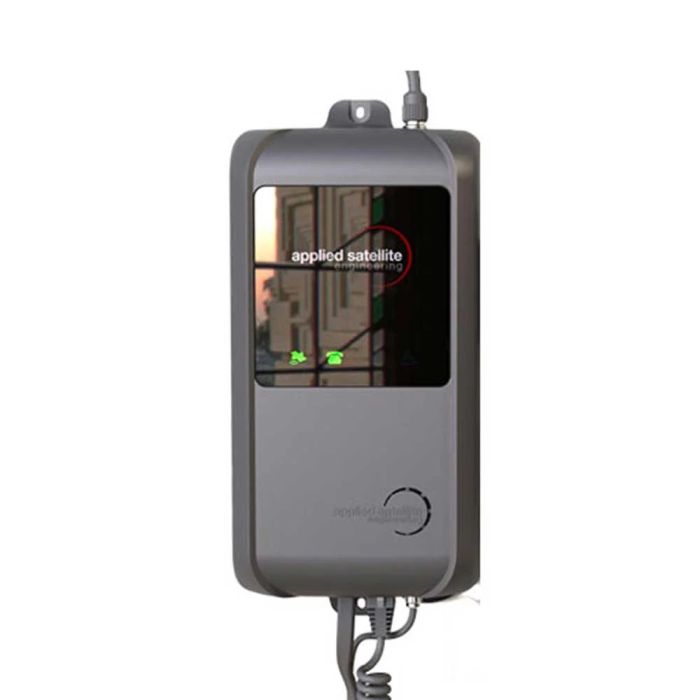
BSN NAL Comcenter Indoor Voice Terminal With Privacy Handset (ASE-MC08-H87)
In stock
- PART #:
- ASE-MC08-H87
- AVAILABILITY:
- SUBJECT TO AVAILABILITY
- SKU:
- BSN NAL-ASE-MC08-H87
BSN NAL Comcenter Indoor Voice Terminal With Privacy Handset (ASE-MC08-H87)
The ASE-MC08 base unit corresponds to the ComCenter II-300 class (voice + data + SMS features), and ASE-MC08-H87 indicates the configuration supplied with an Intelligent Privacy Handset (often bundled with a swivel/RAM-style mount by dealers).
At a system level, the ComCenter is commonly installed indoors with a roof- or mast-mounted Iridium-approved external antenna and then integrated into on-site telephony (PABX/POTS) and Ethernet networks for low-bandwidth satellite data transfer, remote diagnostics, or control channels.
Design and Features
Indoor fixed-station terminal architecture
The ComCenter II MC08 is designed for indoor, protected-location installation (wall mount form factor), with the satellite antenna mounted externally for clear sky view. Its purpose is to allow staff to use satellite voice and limited data from inside an office or facility, rather than operating a handheld phone outdoors.
Enhanced voice via POTS and privacy handset
The MC08 supports RJ-11 (POTS) integration for:
-
a single analog phone or office speakerphone
-
a wireless handset base station
-
or a PABX / corporate telecom trunk line integration (with precautions)
The Intelligent Privacy Handset is a dedicated handset option for direct satellite calling and user control. The handset connects using an RJ-45-style port, but the manufacturer warns it is not a generic Ethernet/telecom port and should only be used for the privacy handset (one handset supported).
Data and network connectivity (Ethernet)
A key differentiator of the ComCenter II-300 / MC08 is its Ethernet port, which provides IP-addressable connectivity for satellite data transfer and remote system control—often used for remote IT access, M2M-style applications, and “VSAT back door” diagnostics in resiliency deployments.
The user manual describes multiple Ethernet connection modes (DHCP client/server and direct/fixed IP) to support either integration with an existing LAN router or direct laptop connection.
SMS texting and embedded messaging
The ComCenter II Series documentation highlights SMS texting capabilities using embedded messaging tools (e.g., ASE SatChat), with texting supported through the platform’s handset/user interface features.
Antenna requirements and engineered cable loss limits
Because Iridium voice/data performance is sensitive to feeder-cable loss, the ComCenter II data sheet specifies that the antenna cable run must not exceed ~3 dB signal loss and provides typical maximum lengths for common cable types (LMR-195, LMR-240, LMR-400, LMR-600, etc.).
Technology and Specifications
Electrical specifications
ASE ComCenter II Series specifications list:
-
Operating voltage: 10–36 VDC
-
Power consumption: 4 W (idle/standby), 9 W (avg active), 15 W (peak)
(Some dealers list slightly different voltage ranges on storefront pages; the manufacturer data sheet is the best baseline reference.)
Interfaces and maximum cable lengths
The ComCenter II Series data sheet lists:
-
RJ-11 (voice) maximum cable length: 3,000 m (9,800 ft)
-
Ethernet (data) maximum cable length: 120 m (400 ft)
Mechanical and environmental
Manufacturer specifications list:
-
Dimensions: 22.8 × 12.7 × 6.3 cm (9.0 × 5.0 × 2.5 in)
-
Weight: 0.9 kg (2.0 lb)
-
Mounting: wall mount
-
Operating temperature: −30°C to +60°C
-
Exposure: indoor, protected location (per IEC 60945 context)
Optional accessories and the “-H” handset designation
ASE’s data sheet notes the privacy handset as an optional accessory and indicates adding “-H” to the order number for handset-included configurations (example: ASE-MC08-H). Dealer listings commonly specify ASE-MC08-H87 to indicate the handset bundle.
PABX integration warning
The installation manual includes a key warning for telecom integration: the ComCenter emulates a landline wall jack and generates ringing voltages; when connecting to a PABX, it should be connected as a central office (CO) / trunk line, not as an extension, to avoid damage.
Applications and Use Cases
Corporate resilience and emergency backup communications
A primary use case is business continuity—providing a satellite voice line and basic data path during disasters, terrestrial outages, or remote operations where the public network is absent.
Remote IT access and “back door” diagnostics
The Ethernet/IP function is often used for remote network access, low-bandwidth monitoring, and diagnostic control channels (commonly described as a VSAT “back door” path), especially in remote industrial sites.
Maritime and offshore facilities
The ComCenter II Series explicitly lists maritime communications among its applications, where an indoor terminal with an external antenna can serve as an always-available voice/data link.
Asset tracking and GPS reporting (model-dependent)
The ComCenter II product family includes models with integrated GPS (“G” models) for reporting/asset tracking use cases; the base MC08 is typically positioned around voice/data.
Advantages / Benefits
Indoor usability with external antenna performance
By pairing an indoor terminal with a properly mounted external Iridium antenna, the system enables reliable satellite calling without requiring personnel to step outside into poor weather or unsafe environments.
Flexible telephony integration (POTS/PABX)
Support for RJ-11/POTS and PABX trunk-line integration allows the ComCenter to fit into existing office telephony workflows—useful for resilience planning and shared satellite access.
Data path for remote control and IT continuity
The Ethernet interface and configurable IP modes support practical remote-access patterns for IT teams (direct laptop, LAN integration, fixed IP), making the system useful beyond voice alone.
Dedicated privacy handset operation
The privacy handset provides a controlled, purpose-built interface for satellite calling and on-device interaction, and its dedicated port prevents accidental misuse of standard network ports (when installed per guidance).
FAQ Section
What is the BSN NAL ComCenter Indoor Voice Terminal With Privacy Handset (ASE-MC08-H87)?
It is an indoor Iridium fixed-station terminal (ComCenter II-300 / MC08 class) bundled with an Intelligent Privacy Handset, providing satellite voice (POTS) plus IP data connectivity for remote or backup communications.
How does ASE-MC08-H87 work?
The MC08 terminal connects to an external Iridium-approved antenna and provides satellite connectivity indoors through RJ-11 (POTS) for phones/PABX and Ethernet for IP data. The privacy handset connects to a dedicated RJ-45-style handset port for direct operation.
Why is ASE-MC08-H87 important?
It supports business continuity and remote-site communications by delivering an always-available satellite voice line and a basic IP path where terrestrial networks may fail or not exist.
What are the benefits of ASE-MC08-H87?
Benefits typically include indoor satellite voice, POTS/PABX integration, Ethernet IP connectivity, configurable LAN connection modes, and a dedicated privacy handset for direct calling and control.
Summary
The BSN NAL ASE-MC08-H87 ComCenter Indoor Voice Terminal with Privacy Handset is a fixed-station Iridium communications platform built to deliver indoor satellite voice (POTS) and Ethernet IP data for resilience, emergency backup, and remote-site operations. With structured antenna-loss guidance, configurable network modes, and a dedicated privacy handset interface (plus PABX integration safeguards), it is positioned as a practical, professional solution for organizations that need dependable connectivity when terrestrial networks are unavailable.
Specifications
| PART # | ASE-MC08-H87 |
|---|