
BSN NAL SHOUT Ts With M-Code Receiver (SHOUT tsM)
In stock
- PART #:
- SHOUT tsM
- AVAILABILITY:
- SUBJECT TO AVAILABILITY
- SKU:
- BSN NAL-SHOUT-tsM
BSN NAL SHOUT Ts With M-Code Receiver (SHOUT tsM)
In the BSN/NAL product lineup, SHOUT devices are commonly deployed for remote personnel tracking, asset visibility, emergency alerting, and structured field check-ins where terrestrial connectivity is unreliable or unavailable. The tsM variant adds an L1/L2 GNSS/M-Code antenna path and a key-fill / 1-PPS interface, reflecting its orientation toward government and mission-critical users who may require protected positioning capabilities and time transfer workflows.
Design and Features
Handheld form factor with protected user interface
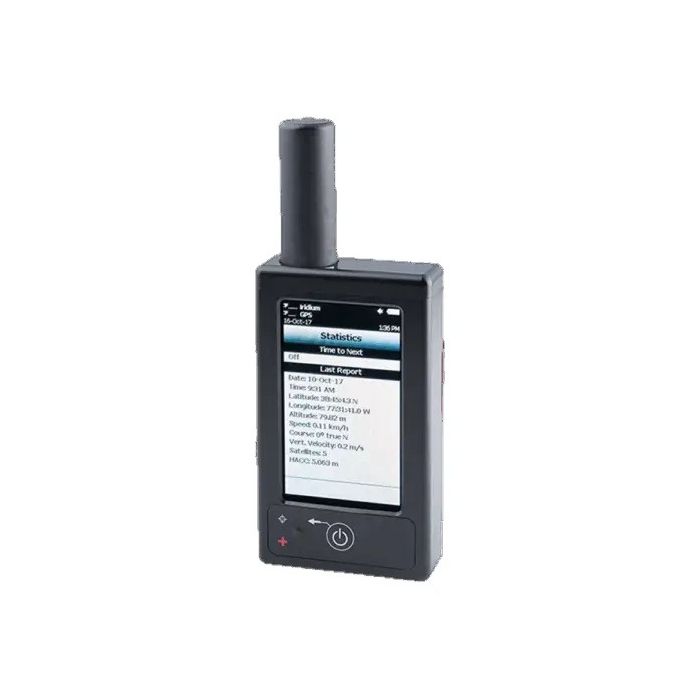
SHOUT ts-class devices are designed as compact handhelds that support messaging and tracking workflows in the field, including a touchscreen interface and a guarded emergency control. A public SHOUT ts datasheet describes the platform as a global two-way satellite messaging and personal tracking device using Iridium SBD, with features such as a guarded alert switch and touchscreen operation.
For SHOUT tsM specifically, the quick start documentation describes a 3.0-inch resistive touch display, status indicator LEDs, and a protective overlay on an IP67 screen display, intended to withstand harsh outdoor conditions and handling.
Dual antennas with dedicated RF connectors
The tsM hardware includes two externally connected antenna points:
-
Iridium antenna (SMA) for satellite communications
-
GNSS/M-Code L1/L2 antenna (SMA) for positioning and timing inputs
This explicit separation of satellite-communications and positioning antennas is typical in designs where positioning performance and protected-signal support are priorities, especially for installations requiring optimized antenna placement or specialized antenna assemblies.
Emergency alert workflow
A dedicated emergency control is part of the tsM’s safety workflow. The quick start guide describes activating emergency tracking by sliding an Emergency Switch Cover and pressing the emergency button, with an emergency indicator LED signaling active emergency tracking.
Sealed ports for charging, data, and protected interfaces
The tsM includes two sealed, IP-rated connection ports:
-
USB-C (Power/Data) used to power the device, charge the battery, and support data usage
-
Micro DB-15 connector described as IP-67 compliant and supporting EKMS-308 compliant key-fill, plus SHOUT bidirectional data transfer modes for Position-Only and Precise-Time transfers
These interfaces reflect a design intended to support both routine device management (charging/configuration) and specialized secure workflows tied to protected navigation and timing.
Technology and Specifications
Satellite communications (Iridium SBD)
SHOUT tsM is described as operating with the Iridium low-Earth-orbit satellite network and allowing only SBD connectivity to that network.
For the broader SHOUT ts platform, a public datasheet explains that Iridium SBD is used for inbound/outbound messaging, tracking reports, and alert notifications.
Positioning: GNSS and military GPS (M-Code capable)
The defining characteristic of the tsM variant is its inclusion of:
-
a Military GPS receiver
-
a GNSS receiver
-
an L1/L2 GNSS/M-Code antenna path
The quick start guide and user-guide summary also describe a user-selectable positioning mode (“Commercial” or “MIL”) in the device settings.
Battery and endurance design
The tsM includes an embedded 3800 mA-Hr battery.
For context on the SHOUT ts family’s low-power design approach, the SHOUT ts datasheet notes ultra-low sleep current and a rechargeable internal battery optimized for large numbers of tracking reports over time, depending on reporting interval and configuration.
Environmental protection
The tsM documentation highlights IP67 protection for the display/overlay and IP-rated ports, consistent with use in wet, dusty, and field environments.
What “M-Code” generally signifies
In GPS terminology, M-Code refers to a protected military GPS signal associated with the Precise Positioning Service (PPS) for authorized users. Public technical coverage describes M-Code as encrypted and associated with jam-resistant use in mission environments, while official GPS service documentation notes that PPS signals may include M-Code.
In operational products like the SHOUT tsM, “M-Code receiver” therefore typically implies that the device can support protected positioning modes when properly authorized and configured.
Applications and Use Cases
Tactical and mission-critical personnel tracking
The tsM is frequently discussed in contexts where tracking and messaging must work beyond cellular networks and where users may require protected navigation signals. The combination of Iridium SBD messaging and dual-mode positioning supports check-ins, movement visibility, and incident escalation in remote environments.
Secure or controlled operations requiring key management and timing
The presence of an EKMS-308 key-fill capable interface and support for position-only and precise-time transfers indicates suitability for workflows where secure key management, time distribution, or protected positioning are part of the operational requirement.
Disaster response and continuity operations
Iridium SBD trackers are commonly deployed for emergency preparedness, continuity of operations, and disaster response where infrastructure is degraded. The tsM’s ruggedized form factor and emergency mode support field teams operating across wide areas without dependable terrestrial coverage.
Remote asset monitoring and structured reporting
SHOUT-family devices support scheduled tracking reports, message acknowledgements, and waypoint/check-in patterns. The tsM variant extends this paradigm to users who also need military positioning modes in addition to commercial GNSS.
Advantages / Benefits
Global reach through Iridium SBD
Because the tsM uses Iridium SBD, it can deliver tracking and messages in areas where cellular networks do not exist or are unavailable.
Dual-mode positioning flexibility
The ability to select between Commercial and MIL positioning modes supports mixed-use deployments and a broader set of mission profiles—subject to authorization for military modes.
Rugged build and field-ready interfaces
IP-rated ports, a protective display overlay, and an emergency mode designed for quick activation support real-world field use in harsh environments.
Secure-interface readiness (key fill / 1-PPS)
The DB-15 interface supporting EKMS-308 key fill and 1-PPS/precise-time transfer aligns with applications that require controlled key handling and timing-aware workflows.
FAQ Section
What is the BSN NAL SHOUT tsM?
The SHOUT tsM is a handheld Iridium SBD satellite tracker and two-way messaging device that includes both a GNSS receiver and a Military GPS (M-Code-capable) receiver, plus an L1/L2 GNSS/M-Code antenna path for protected positioning workflows.
How does the SHOUT tsM work?
The device uses the Iridium satellite network to send and receive short data messages (SBD). It determines position using the selected receiver mode (Commercial or MIL) and transmits tracking or emergency messages through configured reporting workflows.
Why is the SHOUT tsM important?
It supports tracking and messaging in remote areas without cellular coverage while enabling dual-mode positioning, including protected M-Code-related positioning features for authorized users and missions that require more resilient PNT.
What are the benefits of the SHOUT tsM?
Key benefits include global Iridium SBD connectivity, rugged IP-rated design, emergency tracking mode, dual-mode Commercial/MIL positioning, and a key-fill/1-PPS interface for controlled and timing-aware workflows.
Summary
The BSN NAL SHOUT tsM is a mission-oriented handheld Iridium SBD tracker and two-way messaging device that adds a Military GPS (M-Code-capable) receiver alongside a commercial GNSS receiver, plus dedicated Iridium and GNSS/M-Code L1/L2 antenna connections. With IP-rated ports, an emergency tracking mode, and a key-fill/1-PPS interface supporting position-only and precise-time transfer workflows, it is designed for operators who need dependable satellite messaging and tracking while maintaining compatibility with protected positioning requirements in authorized environments.
Specifications
| PART # | SHOUT tsM |
|---|