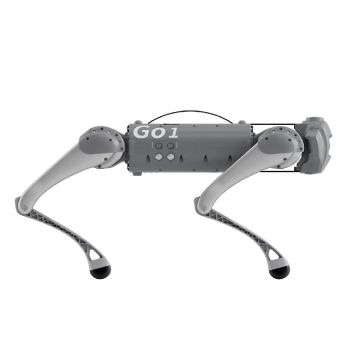
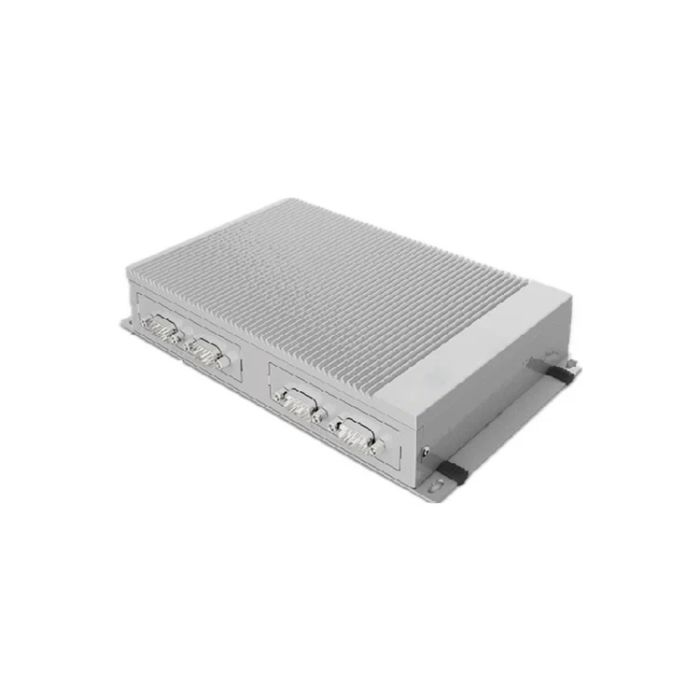
Unitree Intel Core I7 Computing Board For B2 (Intel Core i7 computing board for B2)
In stock
- BRAND:
- UNITREE ROBOTICS
- PART #:
- Intel Core i7 computing board for B2
- ORIGIN:
- China
- AVAILABILITY:
- SUBJECT TO AVAILABILITY
- SKU:
- Unitree-Intel-Core-i7-computing-board-for-B2
Intel Core I7 Computing Board For B2 Series Accessories (Intel Core i7 computing board for B2)
Unitree’s official B2 platform documentation and multiple reseller specifications describe a two-tier compute architecture: an Intel Core i5 for “platform functions” and an Intel Core i7 for “user development,” with higher-end options adding Nvidia Jetson Orin NX modules for AI workloads.
This makes the i7 board especially relevant for organizations using the B2 platform for research, inspection, autonomy prototyping, and industrial pilot deployments.
The i7 computing board is also widely referenced as a core component of the Unitree B2 Navigation Kit (Basic), where product descriptions explicitly list an Intel Core i7 computing board bundled with a 32-wire automotive-grade LiDAR and navigation algorithms/SDK.
Design and Features
Dedicated computing layer for “user development”
A defining characteristic of Unitree’s B2-series computing architecture is its division between:
-
Platform compute (commonly listed as Intel Core i5)
-
User development compute (commonly listed as Intel Core i7)
This split is meaningful in real-world deployments. The platform compute typically manages the robot’s baseline operation, while the user development compute is designed to support application-level software, payload processing, and customized autonomy stacks.
Compatibility across B2 and B2-W
Public listings commonly describe the i7 computing board as compatible with both B2 and B2-W, and some product pages label it as “B2 dedicated Intel Core i7 computing board assembly” and “Compatible for B2-W as well.”
This cross-compatibility matters for teams operating mixed fleets (legged-only B2 and wheel-legged B2-W), enabling a consistent development baseline across robots.
Tight integration with navigation and perception upgrades
The strongest public clue about the board’s practical role is how it appears inside the B2 Navigation Kit (Basic), which is described as a hardware + software kit that includes:
-
protective bracket and customized cabling
-
32-wire automotive-grade LiDAR
-
Intel Core i7 computing board (built-in basic navigation algorithms)
-
online technical support/training
-
navigation algorithm + SDK included (on-site implementation not included)
In other words, the i7 board is not just “extra computing power”—it is marketed as part of a functional navigation solution (especially for research and demonstration scenarios).
Technology and Specifications
Compute role inside the Unitree B2 platform
Unitree’s published B2 specifications describe a system where perception and control compute can scale with optional modules. The standard architecture highlights:
-
Intel Core i5 (platform function)
-
Intel Core i7 (user development)
For organizations requiring even higher performance, Unitree also describes optional configurations that combine an i7 with up to multiple Nvidia Jetson Orin NX units for AI-heavy tasks.
SDK and navigation algorithm support (via Navigation Kit context)
While the i7 computing board can be purchased as a standalone accessory from some sellers, its most explicit feature set appears in the B2 Navigation Kit documentation, where it is listed as:
-
Intel Core i7 computing board (built-in basic navigation algorithms)
-
Navigation algorithm and SDK included
This is important because it ties the computing board directly to autonomy enablement—especially LiDAR-based navigation workflows in controlled environments.
System interfaces and robotics integration readiness
Unitree’s B2 platform documentation lists a robust set of external I/O interfaces available on the robot platform, such as multiple Ethernet ports and USB ports, supporting the typical needs of robotics integration and peripheral expansion.
Although the i7 computing board’s full port list is not always published as a standalone spec on reseller pages, its role in the navigation kit strongly implies it is intended to interface with LiDAR and onboard sensors via high-bandwidth connections.
Applications and Use Cases
1) Autonomous navigation development for B2/B2-W
The most direct documented use case is navigation development, where the i7 board is bundled with LiDAR and navigation software in Unitree’s B2 Navigation Kit (Basic). This is explicitly described as suitable for scientific research and demonstration scenarios, and it includes the navigation SDK.
Common workflows supported by this type of configuration include:
-
indoor/outdoor mapping demos in controlled areas
-
autonomous waypoint navigation prototypes
-
LiDAR-based obstacle detection and path planning experiments
2) Industrial inspection payload processing
Unitree’s B2 is marketed for industrial inspection and high-mobility field tasks, with official platform descriptions emphasizing terrain traversal, stability, and perception sensor integration.
In inspection deployments, the i7 computing layer can be used to run:
-
inspection routines that process sensor data in real time
-
edge analytics for anomaly detection prototypes
-
integration middleware that forwards sensor streams to a control room
3) Research and education platforms
The B2 Navigation Kit (Basic) explicitly targets research and demonstration, and the presence of an i7 computing board in that package reinforces its relevance for universities, labs, and innovation teams building repeatable autonomy experiments.
4) Multi-sensor fusion and advanced perception stacks
B2-series robots are commonly described as including multiple perception sensors (e.g., 3D LiDAR, depth cameras, optical cameras), and reseller specifications highlight expanded compute options to support enhanced processing.
In those contexts, the i7 board becomes a practical foundation for:
-
sensor fusion pipelines (LiDAR + depth + vision)
-
localization and mapping systems
-
developer environments where user code runs independently from core platform control
Advantages / Benefits
Higher performance development environment on the robot
Compared with minimal embedded controllers, an Intel Core i7-class robotics compute environment enables faster iteration on robotics software, including real-time perception, mapping, and autonomy prototypes. Unitree’s B2 architecture explicitly frames the i7 as the user development compute layer.
Clear pathway into navigation-ready configurations
Because the i7 computing board is listed inside the B2 Navigation Kit (Basic) alongside LiDAR and navigation algorithms/SDK, it provides a structured upgrade path for teams that want navigation features without designing every component from scratch.
Fleet consistency across B2 and B2-W
Standalone product listings and navigation kit notes repeatedly state compatibility with B2-W as well, supporting standardized development across wheel-legged and legged variants.
Expandability toward AI accelerators
For organizations that eventually outgrow x86-only compute, Unitree describes optional configurations combining i7 with Jetson Orin NX modules, supporting scalable performance for AI workloads.
Comparisons
Intel Core i7 board vs platform Intel Core i5 (B2 architecture)
In Unitree’s published B2 compute layout, the Intel Core i5 is associated with platform functions, while the Intel Core i7 is associated with user development.
This makes the i7 board more relevant for teams that need onboard compute resources for custom applications, autonomy experiments, or heavier sensor processing.
Intel Core i7 board vs i7 + Jetson Orin NX options
Reseller and official references describe optional configurations that add Jetson Orin NX modules alongside i7 for enhanced AI performance.
In general terms, this positions the i7 board as a strong baseline for robotics development, while i7 + Orin NX targets more demanding deep learning inference and AI-driven autonomy stacks.
Standalone i7 board vs complete Navigation Kit bundle
A standalone purchase typically provides only the compute module, whereas the B2 Navigation Kit (Basic) includes LiDAR hardware, mounting hardware, and software support elements such as algorithms and SDK access.
FAQ Section
What is the Unitree Intel Core i7 computing board for B2?
The Unitree Intel Core i7 computing board for B2 is a dedicated onboard compute module for Unitree B2 and B2-W robots, positioned as the user development computing layer in Unitree’s B2 platform architecture.
How does the Intel Core i7 computing board for B2 work?
It provides additional processing power on the robot for running user applications, perception pipelines, and autonomy development software. In the B2 Navigation Kit (Basic), it is listed as an i7 computing board with built-in basic navigation algorithms, paired with LiDAR and an SDK.
Why is the Intel Core i7 board important for Unitree B2 robots?
Unitree’s B2 compute architecture separates platform functions from user development computing, and the i7 board supports the development side—helping teams build advanced inspection, mapping, and navigation capabilities beyond baseline robot operation.
What are the benefits of the Intel Core i7 computing board for B2?
Common benefits include stronger onboard compute for user development, better support for sensor processing and autonomy prototypes, compatibility across B2 and B2-W, and alignment with navigation-ready bundles that include algorithms and SDK access.
Summary
The Unitree Intel Core i7 Computing Board for B2 is a specialized onboard compute module intended to power user development workloads on Unitree B2 and B2-W industrial quadruped robots. Its role is reinforced by Unitree’s published compute architecture (Core i5 for platform functions and Core i7 for development) and by its inclusion in the B2 Navigation Kit (Basic), where it is paired with LiDAR, navigation algorithms, and an SDK for research and demonstration navigation scenarios.
Specifications
| PART # | Intel Core i7 computing board for B2 |
|---|---|
| BRAND | UNITREE ROBOTICS |
What's included
Related Products