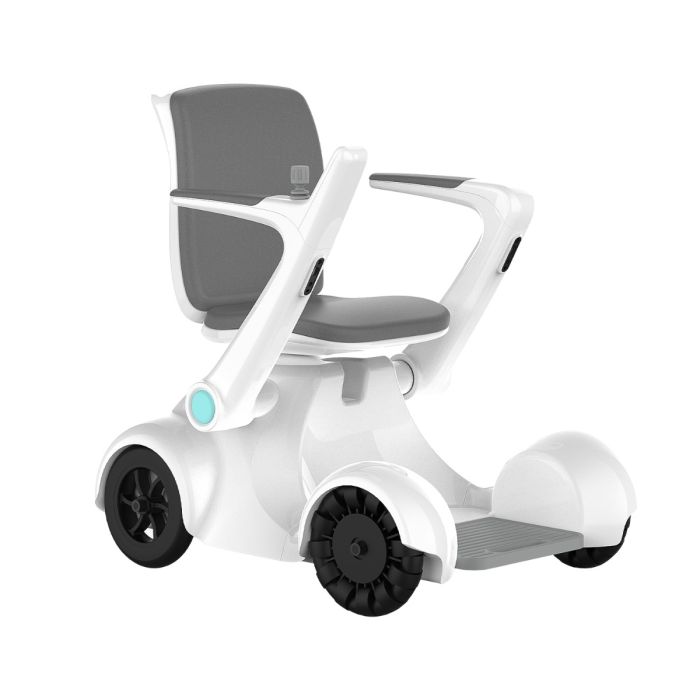
UBTECH PATHFYNDER Smart Chair
In stock
- BRAND:
- UBTECH
- PART #:
- PATHFYNDER
- ORIGIN:
- China
- AVAILABILITY:
- SUBJECT TO AVAILABILITY
- SKU:
- UBTECH-PATHFYNDER
UBTECH PATHFYNDER Smart Chair
UBTECH PATHFYNDER Smart Chair
PATHFYNDER is associated with UBTECH’s broader robotics ecosystem through UBTECH-linked entities, including Futronics (NA) Corporation and related Futronics subsidiaries referenced in UBTECH corporate reporting. The PATHFYNDER Smart Chair product literature describing capabilities and operating modes has been distributed via Futronics/MedicalExpo-hosted materials.
Design and Features
Smart-chair form factor and user interface
PATHFYNDER is designed as a powered chair platform intended for indoor use, combining a user-facing control interface with autonomous “robot modes.” Product literature describes operation that can include manual control (e.g., joystick driving) and automated navigation modes for route following and indoor guidance.
Autonomous mobility and safety concepts
Like other indoor autonomous mobile robots, a smart chair typically relies on a multi-sensor perception stack and mapping to avoid obstacles, navigate corridors, and approach destinations. The PATHFYNDER literature emphasizes indoor mobility use cases and includes descriptions consistent with assisted autonomous travel, such as planned-route travel in facilities and user support for reaching common destinations.
Deployment-oriented design
Robotic mobility products aimed at care facilities usually prioritize:
-
predictable operation in structured indoor spaces (hallways, elevators, doorways),
-
conservative speed and collision-avoidance behavior,
-
straightforward charging and daily readiness,
-
administrative setup such as facility mapping and route definition.
PATHFYNDER materials present it as a facility-deployable system rather than a consumer gadget, implying configuration and integration work during rollout.
Technology and Specifications
Navigation and perception (typical architecture)
While public brochures may not enumerate every component, “smart chair” systems generally combine:
-
mapping and localization (commonly SLAM—simultaneous localization and mapping),
-
proximity sensing for obstacle detection (often depth sensors, LiDAR, ultrasonic sensors, and/or cameras),
-
path planning and control tuned for smooth movement around pedestrians,
-
fail-safe behaviors (stop, slow, re-route, or request assistance).
PATHFYNDER’s published positioning aligns with this category of indoor autonomous mobility assistance, with emphasis on guided indoor driving and operational modes intended for assisted environments.
Human-centered mobility control
A key technical distinction between an autonomous chair and a standard service robot is human-in-the-loop control: the system must balance rider comfort, precise stopping, and safety constraints with autonomy. In practice, this typically means:
-
smooth acceleration/braking profiles,
-
careful cornering to avoid tipping risk,
-
conservative obstacle-clearance margins,
-
a quick switch between manual and autonomous behavior.
Connectivity and fleet considerations
In institutional deployments, smart mobility devices often integrate with:
-
basic fleet monitoring (status, battery, maintenance alerts),
-
route libraries (predefined destinations),
-
facility operations (restricted zones, scheduling).
The product literature distribution channel and corporate context suggest PATHFYNDER targets institutional buyers who can support setup and ongoing operation.
Note on specifications: Publicly accessible materials may not provide a complete spec table (e.g., exact speed, turning radius, payload). When specifications are not explicitly published, they are typically provided through quotations, deployment proposals, or datasheets shared under NDA during procurement.
Applications and Use Cases
Senior living and assisted-care facilities
A primary use case for a smart chair is enabling residents or patients to travel to common destinations (dining areas, recreation rooms, clinics) with reduced dependence on escorts—especially in large facilities with long corridors and repeated daily trips.
Hospitals and rehabilitation centers
In hospitals, mobility assistance can reduce staff burden for non-critical transport tasks, while supporting patient autonomy where appropriate. Rehab-focused deployments can also support training routines and supervised movement.
Large indoor venues
Some organizations explore guided mobility systems for large indoor venues (campuses, exhibition halls) where predictable pathways and mapped routes can simplify navigation and improve accessibility.
Advantages / Benefits
Improved independence and dignity
For users who can safely ride and interact with a powered mobility device, a smart chair can support independence—especially for routine trips in familiar buildings.
Reduced operational load on staff
Facilities often face labor constraints. Automating or semi-automating routine escort trips can reduce staff time spent on repetitive transport tasks, allowing more focus on clinical or care activities.
Consistent, facility-mapped navigation
Mapped indoor routes can reduce the chance of users getting lost and can enforce preferred pathways (e.g., avoiding staff-only corridors).
Safety-oriented autonomy
Autonomous mobility in care settings is typically designed for conservative behavior: obstacle avoidance, cautious speed control, and predictable stopping near doorways and intersections.
FAQ Section
What is the UBTECH PATHFYNDER Smart Chair?
The UBTECH PATHFYNDER Smart Chair is an indoor mobility-assistance platform that combines a powered chair with autonomous navigation features designed for environments like senior living facilities and hospitals.
How does the PATHFYNDER Smart Chair work?
In typical deployments, a smart chair uses onboard sensors and mapping software to understand its surroundings, avoid obstacles, and follow planned indoor routes. Users may switch between manual driving (such as joystick control) and assisted/autonomous travel modes depending on facility setup and user needs.
Why is a smart chair important in healthcare and senior living?
Smart chairs can improve accessibility and independence for riders while reducing repetitive escort workload for staff. In large facilities, guided indoor mobility can also reduce navigation errors and support safer, more predictable movement.
What are the benefits of the PATHFYNDER Smart Chair?
Common benefits include assisted indoor navigation, reduced reliance on escorts for routine trips, and a safer, more predictable mobility experience in structured environments such as care facilities.
Summary
The UBTECH PATHFYNDER Smart Chair represents a category of indoor mobility technology that blends powered seating with autonomous navigation methods adapted from service robotics. Positioned for healthcare and senior-living environments, it emphasizes facility-friendly deployment, assisted navigation, and operational benefits that can improve accessibility while reducing routine transport burdens.