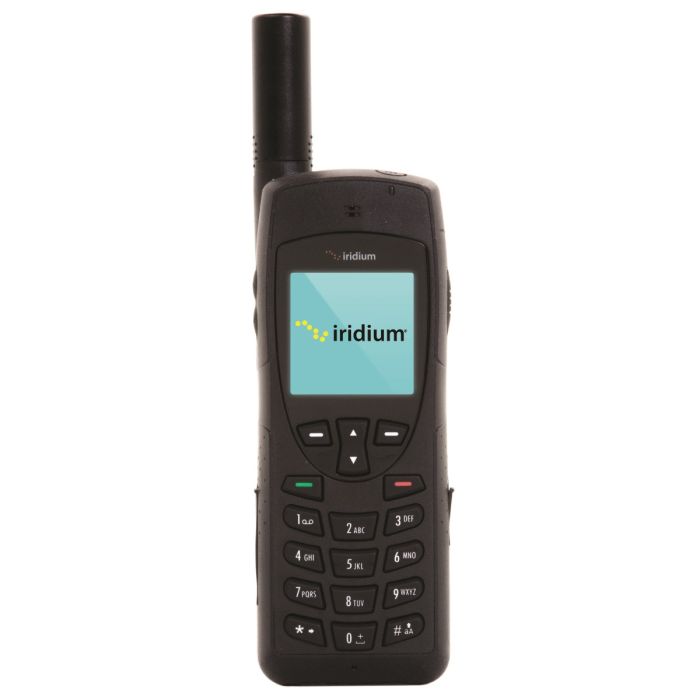
Iridium 9555N Satellite Phone (BPKTN1901)
In stock
- BRAND:
- IRIDIUM
- MODEL:
- 9555N
- PART #:
- BPKTN1901
- ORIGIN:
- Thailand
- Warranty:
- 12 MONTHS
- AVAILABILITY:
- USUALLY SHIPS IN 2-3 BUSINESS DAYS
- SKU:
- Iridium-9555-Satellite-Phone
Iridium is the only provider of truly global satellite voice and data solutions with complete coverage of the earth (including oceans, airways and Polar Regions). Iridium phones deliver essential communications services to and from remote areas where no other form of communication is available.
The Iridium 9555 is the ultimate in dependable mobile communications. It is a ruggedly built tool, not a toy. It won't play games, take pictures, or play MP3s. What it will do is work. Everywhere. Without exception. It is engineered to withstand the world's toughest environments, so the world's toughest customers can depend on it as a critical lifeline whenever and wherever need takes them.
The innovative design of the Iridium 9555 satellite phone offers a significantly reduced size, a more hand-friendly form factor, an intuitive user interface, and new features such as an internally stowed antenna. It is compact, light and easy to use, featuring a brighter screen, a speaker phone, improved Short Messaging Service (SMS) and email capabilities, and an upgraded mini-USB data port. The 9555 phone is engineered to withstand and perform well in the world's most rugged, remote and industrial environments, including being water- and shock-resistant. Combined with the only communications network providing truly global coverage, the 9555 delivers the reliable, secure, real-time, mission-critical communications service that Iridium users have come to expect.
Specifications
| UPC | 609728382551 |
|---|---|
| HS CODE | 85176200 |
| SHIPS FROM | ARIZONA, USA, CALGARY, AB, CANADA, DUBLIN, IRELAND |
| MODEL | 9555N |
| PART # | BPKTN1901 |
| PRODUCT TYPE | SATELLITE PHONE |
| USAGE AREA | 100% GLOBAL |
| BRAND | IRIDIUM |
| NETWORK | IRIDIUM |
| SERVICE | IRIDIUM VOICE |
| USE TYPE | HANDHELD |
| ACCESSORY TYPE | HANDSET |
| FREQUENCY | L BAND (1-2 GHZ) |
| OPERATING TEMPERATURE | -10°C TO 55°C (14°F - 131°F) |
| DATA SPEED | UP TO 2.4 KBPS (SEND / RECEIVE) |
| SUPPORTED LANGUAGES | ARABIC, CHINESE (SIMPLIFIED AND TRADITIONAL), CZECH, DANISH, DUTCH, ENGLISH, FINNISH, FRENCH, GERMAN, GREEK, HEBREW, HUNGARIAN, ITALIAN, JAPANESE, KOREAN, NORWEGIAN, POLISH, PORTUGUESE, RUSSIAN, SPANISH, SWEDISH, TURKISH |
| FEATURES | FREE INCOMING CALLS*, FREE INCOMING SMS**, FREE VOICEMAIL***, PHONE, TEXT MESSAGING |
| CERTIFICATIONS | FCC, INDUSTRY CANADA, IRIDIUM CERTIFIED |
| HARMONIZED TARIFF NUMBER | 85176200 |
| CONSTELLATION | 66 SATELLITES |
| TALK TIME | UP TO 4 HOURS |
| STANDBY TIME | UP TO 30 HOURS |
| LENGTH | 143 mm |
| WIDTH | 55 mm |
| DEPTH | 30 mm |
| WEIGHT | 266 grams (9.4 oz) |
Feature
Iridium 9555 Features
Industrial-grade design for unparalleled durability
Compact physical footprint for streamlined portability
Intuitive user interface for out-of-the-box functionality
Enhanced SMS and email messaging capability
Integrated speakerphone
Headset and hands-free capability
Internally stowed antenna
Mini-USB data port and support for phone as modem
21 supported menu languages
Display
200 character illuminated graphic display
Volume, signal and battery strength meters
Illuminated weather-resistant keypad
Calling Features
Integrated speakerphone
Quick-connect to Iridium voice mail
Two-way SMS and short email capability
Pre-programmable International Access Code (00 or +)
Mailbox for voice, numeric & text messages
Selectable ring and alert tones (8 choices)
Memory
100-entry internal address book, with capacity for multiple phone numbers, email addresses and notes
SIM card address book with 155-entry capacity
Call history retains received, missed and dialed calls
Usage Control Features
User-configurable call timers to manage costs
Keypad lock and PIN lock for additional security
What's included
Iridium Global Coverage Map
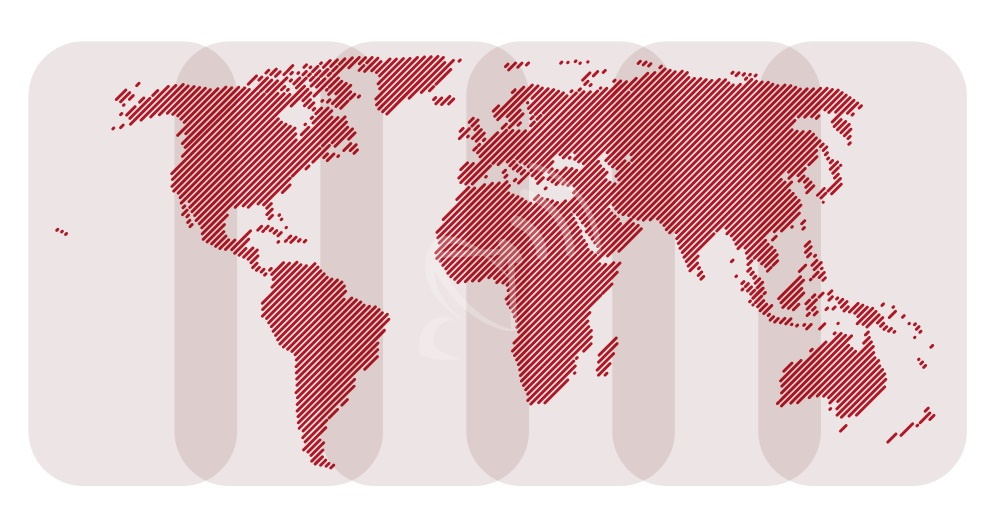
Iridium delivers essential communications services to and from remote areas where no other form of communication is available. Powered by a uniquely sophisticated global constellation of 66 cross-linked Low-Earth Orbit (LEO) satellites, the Iridium® network provides high-quality voice and data connections over the planet’s entire surface, including across airways, oceans, and polar regions. Together with its ecosystem of partner companies, Iridium delivers an innovative and rich portfolio of reliable solutions for markets that require truly global communications.
At only 780 kilometers from the Earth, the proximity of Iridium’s LEO network means pole-to-pole coverage, a shorter transmission path, stronger signals, lower latency, and shorter registration time than with GEO satellites. In space, each Iridium satellite is linked to up to four others creating a dynamic network that routes traffic among satellites to ensure global coverage, even where traditional local systems are unavailable.
Downloads
Customer Reviews
What an absolute pleasure and rewarding experience to know you can communicate from anywhere at any time with anybody!
The Iridium network, conceived, engineered, and built by Motorola, launched in 1997 as the first commercial constellation of 66 low earth orbit (LEO) satellites, crisscrossing the planet at about 500 miles above the Earth. The network was designed to provide secure communications on a global basis from a handheld that weighed about 12 ounces and could fit in your back pocket. While traditional geostationary satellite services, such as Inmarsat, requires the radio to be in one position during use so that the antenna can lock into a satellite beam, Iridium is entirely different. The system works while flying, driving, walking, or onboard a ship. I have had extensive experience with the Iridium network since it commenced operations, and have used each of the three different handsets (the 9500, 9505, and 9505A) that were available prior to the 9555. This system currently offers voice and data communications virtually anywhere, even in the most remote regions of the world, as I can personally attest.
There are several noticeable improvements in the latest phone in terms of design, operation, software, and functionality. After placing a few calls on the new handset, I can say that the audio quality seems to be much improved from my older 9505 unit. I recorded one of the calls that I made to an associate so you can judge this for yourself. The handset closely resembles a larger cell phone, but works very differently with regard to its communications path and network infrastructure. The menu system, display, and software of the 9555 have also been updated. The package is about 30 percent smaller than its predecessor, the 9505, and the special antenna has been redesigned to retract into the body of the radio, rather than rotating and swinging upward to a vertical position. The battery charging system is also better in terms of size and connector. The handset now has a USB data port and new software for simplified Internet access. Although the transmission speed is still very slow, at 9600 baud, it is acceptable for e-mail when there is no other available service.
The communications security of the Iridium network is assured because of the way it transmits data from the handset to one or more satellites, then to a network gateway and the public switched telephone network. The satellites all talk to each other across the constellation in order to relay signals to a gateway facility, but the information is not repeated down to the ground, so intercept is extremely difficult. Even if the 1,640Mhz signal could be captured directly from a handset, it would not provide much intelligence because of the way in which the network is configured. As an example, I was in Havana, Cuba last year and needed to make secure telephone calls back to the U.S. Cuban authorities routinely monitor cell phone traffic but are unable to listen in on Iridium. If you routinely travel to countries where you require the ability to communicate by voice or data without fear of eavesdropping, then Iridium is an excellent solution.
The prime North American competitor is Globalstar, which was originally launched at about the same time as Iridium. The Globalstar network is also based upon a LEO satellite constellation, but the infrastructure and transmission protocol are quite different than Iridium. Their 48 satellites operate about twice the distance from Earth than those of Iridium, and talk to different ground stations that are operated by various Globalstar partners. The network filed for bankruptcy in 2002 but came back two years later after an infusion of capital from Thermo Capital Partners. Unfortunately, Globalstar has been experiencing significant technical problems which have affected its coverage and reliability of service.
Iridium filed for bankruptcy in 1999. When it shut down, the network consisted of 13 planned or constructed gateway facilities throughout the world. The system was supposed to be decommissioned, but at the last minute, it was decided that Iridium could be a vital military communications asset, especially since one of the network operation centers was built in Hawaii specifically to handle all of the government traffic. An entrepreneur purchased the entire Iridium system for about $25 million and then signed an agreement with the Department of Defense to supply communications to the DOD, state, and other government agencies. When it resumed operation, the system was locked into the original two handsets. The 9500 and 9505 (and the slightly modified 9505A) were all that were available because the prime supplier, Motorola, was out of the picture. The network and current handsets have continued to provide primary handheld satellite communications for the Defense Department and state in Iraq and virtually everywhere else in the world. Iridium is utilized for mission-critical applications by many government agencies and private industries. The cost of a call is $1 to $2 a minute, depending upon pricing plan. It is competitive with cellular, but offers a much more cost-effective solution for portable-to-portable communications when roaming overseas on GSM networks.