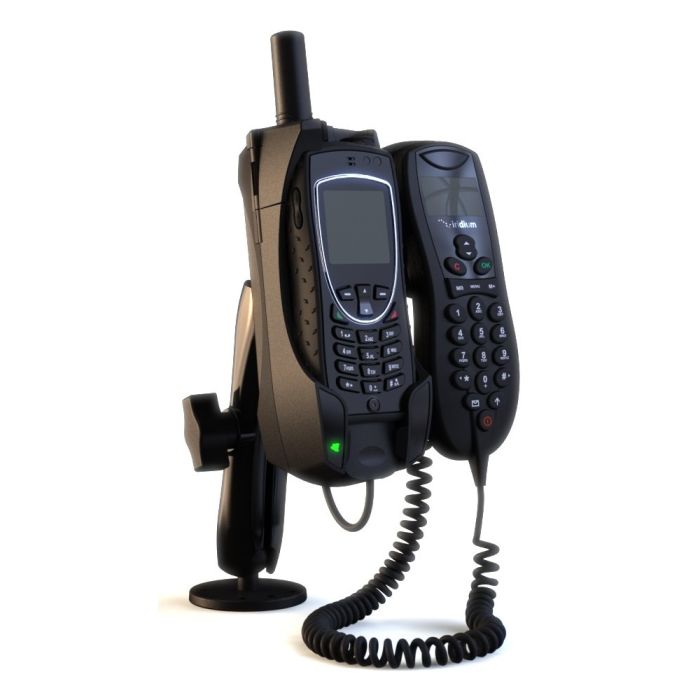
DISCONTINUED - ASE 9575 Extreme Docking Station w/ Corded Privacy Handset (ASE-9575-H)
Out of stock
- BRAND:
- ASE
- PART #:
- ASE-9575-H
- Warranty:
- 12 MONTHS
- AVAILABILITY:
- DISCONTINUED
- SKU:
- ASE-9575-H-Extreme-Docking-
ASE 9575 Extreme Docking Station w/ Corded Privacy Handset (ASE-9575-H)
Docking stations in the ASE 9575 family are often used when a satphone must be accessible indoors (office, security post, emergency operations desk) or inside a vehicle cabin, but the best antenna location is outside with a clear view of the sky. In that architecture, the dock keeps the handset reachable while external antennas improve link reliability compared to handheld-only use in obstructed environments.
Design and Features
Rugged locking cradle for harsh environments
The docking station centers on a secure cradle that locks the Iridium 9575 handset in place. Reseller descriptions emphasize a latching connection intended to reduce vibration effects and maintain reliable communications in rugged conditions (vehicle vibration, off-road movement, marine motion).
External antenna coupling for Iridium and GPS
A primary feature of the dock is that, when the handset is docked, it can use external antennas for:
-
Iridium satellite signal (voice/data)
-
GPS position (used for location features and SOS context)
In the family quick-start documentation, the dock’s antenna interfaces are identified as TNC for the Iridium antenna and SMA for the GPS antenna (connector gender and exact cable/adapter requirements are installation-dependent).
Corded privacy handset
The defining characteristic of ASE-9575-H is the included corded privacy handset, intended for private, telephone-style conversations. In the docking station manual, the handset is connected via an RJ-45 jack, and the guide stresses inserting the plug until it “clicks” into place. The same documentation warns that although an RJ-45 connector is used, it is not an Ethernet/network port and should not be treated as one.
Access to settings and diagnostics via the installed interface
The ASE user guide for the 9575 docking station family describes operational and diagnostic workflows accessible through installed interfaces, including checks related to signal and antenna conditions (e.g., verifying usable signal for calling and identifying antenna blockage issues).
Technology and Specifications
Supported handset platform
ASE-9575-H is built around the Iridium 9575 Extreme handset form factor and docking contacts. The dock’s purpose is to provide a stable installed platform while keeping the phone removable for portable use.
Antenna system interfaces
The dock family quick-start guide lists external antenna connections intended for:
-
Iridium antenna connection (TNC interface listed in the guide)
-
GPS antenna connection (SMA interface listed in the guide)
This split is typical for installed satphone systems: the satellite RF path is optimized for rooftop/mast placement, while GPS is routed to a separate antenna for consistent sky view.
Power and integration context
Docking stations in this class are designed for semi-permanent installations, with documented steps for connecting power, attaching external antennas, and (where relevant) connecting optional data interfaces such as USB for supported workflows.
Installation quality as a performance determinant
The user guide repeatedly frames installation correctness—especially antenna placement and cable routing—as critical to performance, warning that careless installation can degrade performance and potentially damage equipment.
Applications and Use Cases
Vehicle installations and fleet operations
In vehicles, the dock provides a secure mount for the handset and supports the use of external roof antennas, helping maintain reliable connectivity without requiring operators to hold the phone to find signal. The corded privacy handset format is suited to vehicle cabins where private calls are required and where handset ergonomics matter.
Marine and coastal operations
On vessels, antennas are typically mounted higher (mast/rail/hardtop) for better sky view, while the phone remains accessible in the bridge or cabin. Dock-based antenna coupling can improve usability below deck or inside metal-rich superstructures that reduce handheld performance.
Fixed-site “indoor satphone” points
Organizations sometimes deploy docking stations as a fixed indoor satellite phone station for continuity during outages, remote facility operations, or emergency preparedness. In that mode, the handset is kept docked for predictable access, while external antennas provide consistent link availability.
Security and operations centers requiring privacy
The privacy handset variant is commonly selected where voice confidentiality matters (security desks, shared offices, dispatch rooms) or where ambient noise makes speakerphone audio impractical. The handset-style interface also aligns with traditional telephony user expectations.
Advantages / Benefits
Better usability than handheld-only operation
By securing the handset in a known location and enabling external antennas, the dock can reduce “walk outside to get signal” behavior and supports repeatable operation in vehicles and buildings.
External antenna performance gains in obstructed environments
Reseller descriptions of the Extreme Dock emphasize improved performance by coupling external Iridium and GPS signals while keeping access to handset ports and controls when docked (including SOS accessibility).
Private calling experience
The corded privacy handset supports a telephone-like calling workflow that is useful where privacy is required and where speaker/mic audio is undesirable.
Diagnostics and structured installation guidance
The docking station family documentation provides structured installation steps and operational guidance that support repeatable deployments across fleets or sites, reducing troubleshooting time in the field.
Comparisons
ASE-9575-H vs other ASE 9575 dock variants
ASE 9575 docking stations are commonly differentiated by the voice interface provided:
-
Privacy handset variant (ASE-9575-H): telephone-style, private audio
-
Hands-free / external speaker-mic variants: open audio for vehicle/crew use
-
Office/HQ (POTS) variants: integration with analog phone infrastructure in some models (different part numbers)
For many buyers, the choice is primarily an operational one: privacy handset for confidential, quiet calling versus hands-free/PTT-like workflows for shared environments.
Docking station vs simple mounting cradle
A simple cradle typically only mounts and maybe charges a handset. The ASE dock family adds external antenna coupling and a dedicated installed voice interface, making it more suitable for harsh environments and fixed-site continuity setups.
FAQ Section
What is the ASE-9575-H docking station?
The ASE-9575-H is a (now discontinued) docking station for the Iridium 9575 Extreme satellite phone that provides installed mounting, external antenna coupling, and a corded privacy handset for telephone-style calling.
How does ASE-9575-H work?
The handset locks into the dock, which connects it to external Iridium and GPS antennas and routes voice through the corded handset connected to the dock’s handset jack.
Why is ASE-9575-H important?
It enables more reliable satphone operation in vehicles and buildings by improving antenna placement and providing a private calling interface that is easier to use than handheld-only operation in obstructed environments.
What are the benefits of the corded privacy handset?
It provides a familiar phone-handset calling experience for private conversations and can be preferable in noisy environments where speakerphone audio is impractical.
Is the RJ-45 handset port an Ethernet port?
No. The docking station documentation explicitly warns that, although it uses an RJ-45 connector, it is not a standard Ethernet/network port.
Summary
The ASE-9575-H is a discontinued installed docking station for the Iridium 9575 Extreme that combines a rugged locking cradle, external Iridium/GPS antenna coupling, and a corded privacy handset interface. Documentation emphasizes correct installation and antenna practices for best performance, while reseller catalogs confirm discontinued status and limited availability. In legacy fleets and fixed sites, the ASE-9575-H remains relevant where privacy-focused voice operation and dependable indoor/vehicle satphone access are priorities.
Specifications
| PART # | ASE-9575-H |
|---|---|
| PRODUCT TYPE | SATELLITE PHONE |
| USAGE AREA | 100% GLOBAL |
| BRAND | ASE |
| NETWORK | IRIDIUM |
| SERVICE | IRIDIUM VOICE |
| USE TYPE | VEHICULAR |
| ACCESSORY TYPE | DOCKING STATION |
| COMPATIBLE WITH | IRIDIUM 9575 EXTREME |
| CERTIFICATIONS | IRIDIUM CERTIFIED |